
Introduction to the Book of Enoch: A Journey Through Angels, Giants, and Redemption
5/7/20255 min read

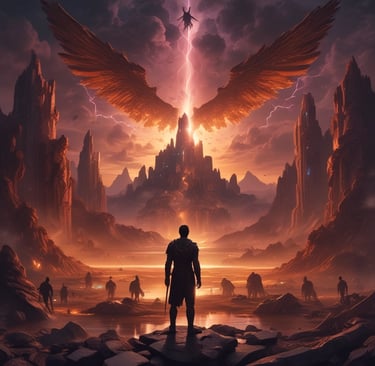
Introduction to the Book of Enoch
“Behold, he comes with ten thousands of his saints, to execute judgment upon all, and to convince all that are ungodly among them of all their ungodly deeds which they have ungodly committed, and of all their hard speeches which ungodly sinners have spoken against him.” – Jude 1:14-15
The Book of Enoch is one of the most fascinating and controversial texts in ancient religious literature. Ascribed to the great-grandfather of Noah, Enoch, this apocryphal work provides an elaborate vision of the supernatural realm, angels, and divine judgment. While not included in the canonical Bible, the Book of Enoch has profoundly impacted both Judaism and Christianity, influencing theological ideas regarding angels, giants, sin, and redemption.
Originally composed during the Second Temple period, likely between the third century BCE and the first century CE, the Book of Enoch was a mystical exploration of divine justice and celestial conflict. It provides a vivid narrative of fallen angels, their rebellion, and their moral corruption on Earth. The text delves deeply into the consequences of their disobedience, showing the interconnection between the spiritual and earthly realms.
Though written in Ge'ez and preserved primarily by Ethiopian Christians, this ancient manuscript has long intrigued scholars and spiritual seekers, who find its mythological richness and cosmic battle between good and evil to be compelling.
Historical Context and Authorship: Understanding the Time and Influence
The Book of Enoch emerged during a period of socio-political unrest and spiritual reflection within the Jewish community. In a time when Jewish beliefs were interacting with Hellenistic and Roman cultures, the book provides a response to the theological challenges of the day. Scholars believe the text underwent several stages of development, and possibly multiple authors were involved in its creation, reflecting the changing theological concerns of the Jewish people.
The authorship remains debated, but it is generally agreed that Enoch, the patriarch who was taken by God without dying (as described in Genesis 5:24), serves as the main voice in the book. His direct engagement with divine beings and his intimate knowledge of cosmic secrets make him a unique figure in ancient religious literature.
In its historical context, the Book of Enoch addresses Jewish hopes for divine intervention during times of oppression, offering a vision of justice and the eventual restoration of righteousness in the world. This period, marked by Hellenistic influence, was fraught with cultural challenges and deep theological reflection, making the Book of Enoch an essential source for understanding Jewish apocalypticism.
Angels in the Book of Enoch: Hierarchy, Roles, and the Fall
One of the most profound aspects of the Book of Enoch is its intricate hierarchy of angels. In stark contrast to the traditional biblical portrayal of angels as messengers, the Enochian angels are categorized by their functions and roles within the celestial realm. The most notable among them are the Watchers, a group of angels assigned to watch over humanity.
However, the Watchers did not simply observe; they descended to Earth, captivated by the beauty of human women, and took them as wives. This union produced the Nephilim, a race of giants whose immense strength and power led to the corruption of the world.
“When the sons of God came in to the daughters of men and they bore children to them, these were the mighty men who were of old, the men of renown.” – Genesis 6:4
The Watchers' disobedience is described in Enoch as a cosmic breach, violating the divine order. Angels, meant to protect and guide humanity, became the cause of its downfall. Their rebellion, marked by their interactions with humanity, represents a corruption of divine boundaries and sin entering the world.
This story echoes the fall of Lucifer, highlighting a key theological theme—the consequences of angelic rebellion. The hierarchy within the text further divides these angels into specific categories, such as archangels: Michael, Raphael, and Uriel, who are tasked with maintaining order and fighting evil forces.
The Nephilim: Giants and Their Origins
The Nephilim, the offspring of the fallen Watchers and human women, play a crucial role in the Book of Enoch. Described as giants or supernatural beings, their existence symbolizes the breakdown of divine order and the consequences of angelic transgressions. Their name comes from the Hebrew root "npl", meaning "to fall," indicating their connection to the fall of angels.
“The Nephilim were on the earth in those days—and also afterward—when the sons of God went to the daughters of humans and had children by them. They were the heroes of old, men of renown.” – Genesis 6:4
These giants were said to be mighty and powerful, but their actions led to the corruption of the Earth. They were agents of chaos and destruction, which is why their existence ultimately played a role in God's judgment through the Great Flood.
The Nephilim’s physical might and their divine-human origin made them both revered and feared. In the Book of Enoch, their legacy continues to influence the cosmic battle between good and evil. Their corruption serves as a warning about the dangers of unrestrained power and the consequences of breaking divine commandments.
Themes of Judgment and Redemption
The Book of Enoch not only focuses on divine judgment but also redemption. Through vivid imagery and prophetic visions, it contrasts the fate of the wicked with the promise of salvation for the righteous. Enoch, as the central figure, is seen as an intermediary, receiving divine revelations and warnings for the people.
The judgment against the fallen angels and the Nephilim is uncompromising. They are bound and cast into gloomy darkness as a punishment for their rebellion. However, the Book of Enoch also offers hope through the possibility of divine mercy and redemption for the righteous.
“For the gifts and the calling of God are irrevocable.” – Romans 11:29
Despite the severe consequences of angelic rebellion, the Book of Enoch suggests that justice, though delayed, will ultimately prevail. The righteous will be rewarded, and the wicked will face judgment. These themes resonate deeply with contemporary ideas about morality, accountability, and the potential for transformation.
The Influence of the Book of Enoch on Later Texts
The Book of Enoch has left a lasting legacy on religious literature and continues to influence both Jewish and Christian traditions. Its themes and imagery are echoed throughout later texts, especially in the New Testament, where the idea of fallen angels and divine judgment persists.
In particular, the Book of Enoch is cited in Jude 1:14-15, showing its direct influence on early Christian thought. The narrative of the Watchers and their punishment serves as a foundation for the later understanding of angels and their role in the cosmic struggle between good and evil.
Moreover, the Book of Enoch has inspired literature, art, and popular culture, where themes of redemption, sin, and the fall of angels continue to captivate audiences. Whether in novels, films, or television series, the book's influence is unmistakable.
Conclusion: The Legacy of the Book of Enoch
The Book of Enoch is a fascinating and deeply influential work that sheds light on the spiritual dynamics of the ancient world. Its stories of fallen angels, giants, and divine judgment continue to shape both religious thought and cultural narratives. Though not included in the canonical Bible, its teachings have had a profound impact on Judeo-Christian theology, apocalyptic literature, and the moral framework that governs the human experience.
The Book of Enoch serves as a reminder of the complexity of good and evil, the importance of moral choices, and the hope of redemption. It challenges us to consider our relationship with the divine, the consequences of our actions, and the potential for forgiveness and transformation.
As we reflect on its legacy, the Book of Enoch invites us to think about our own spiritual journey, the forces that shape our decisions, and the possibility of salvation in a world where good and evil constantly struggle for dominance.